

 wellnessfitpro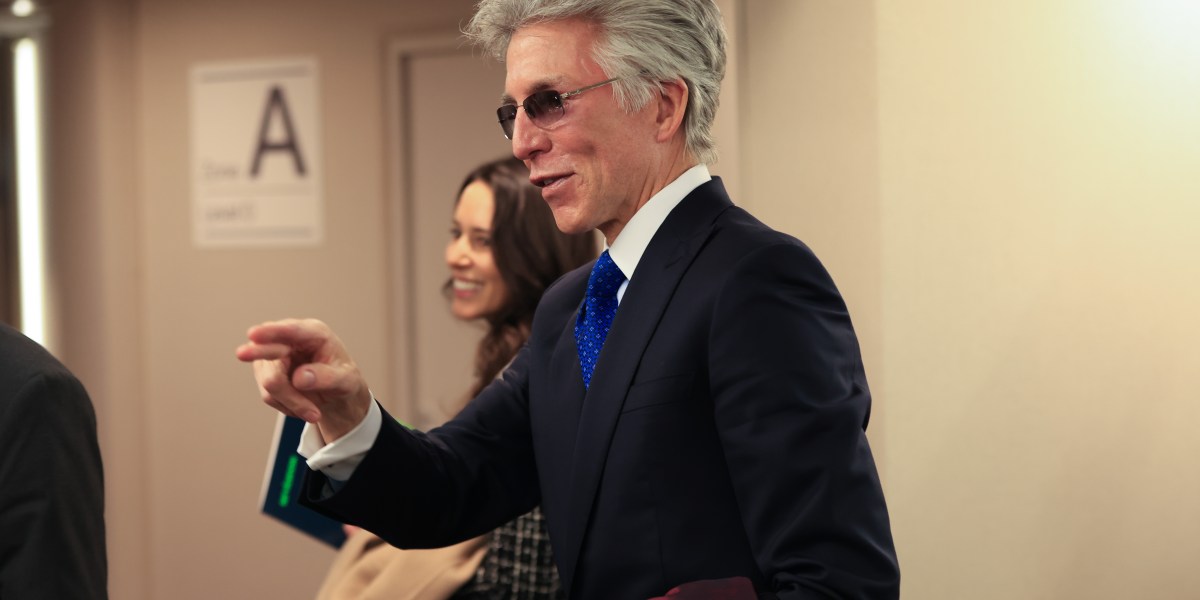

Good morning. The atmosphere here at the World Economic Forum in Davos is all about nervous excitement as the Trump administration descends on the normally quaint but currently chaotic ski town in the Alps.
President Donald Trump will be making remarks just a couple hours from now, and Fortune will be reporting live from USA House on the main promenade, with insights from government officials and chief executives during and immediately following the president’s conversation. Keep an eye on our livestream, here https://fortune.com/2026/01/21/ceos-davos-buy-into-the-agentic-ai-hype/.
Elsewhere around town, CEOs are setting their agendas for the year. Here’s what’s top of mind for a few of them:
This will actually be the year of agentic AI. The first time I heard the term “agentic AI” was at Davos last year. For all the hype around it, does the average CEO really know what it is or how to deploy it? And is AI good enough yet for agents to replace or even significantly assist human employees? The answer appears to be yes. Google Gemini head Demis Hassabis told me that Gemini 3 achieved some milestones that allow agentic AI to truly proliferate in terms of its capabilities. ServiceNow CEO Bill McDermott is also an emphatic “yes,” and says he is already using it to do things like automate his IT department (without doing layoffs, he stresses; he says he has repurposed employees instead). He thinks other CEOs are ready to do the same.
Get ready for Google glasses—for real, this time. A decade ago, Google launched its Google Glass eyewear to widespread mockery. Hassabis thinks the timing was just off; at the time there was no super app to go on the platform. AI has changed that, and Hassabis is bullish on Gemini glasses being the future form for consumer AI. Meta is betting the same thing, and OpenAI is also reportedly considering a super-device, but it doesn’t seem like either can match Gemini’s capabilities any time soon.
There’s artificial intelligence, and now there’s also “energy intelligence.” Schneider Electric CEO Olivier Blum says that nailing energy intelligence is his mission this year. By that he means he wants to capture data from various energy sources into a single “data cube,” filter it, and use agentic AI so customers can manage it all in one place to find opportunities to save power and money. “Our job is to make sure we go to the next level of energy technology to make energy more intelligent,” he told me yesterday. If he can achieve it, he sees a 7%-10% annual growth opportunity ahead.
Greenland: national panic or national security risk? I’ve heard various reactions to President Trump’s desire for a full U.S. takeover of the huge island—from outrage to vigorous support. If he does get his wish (which some here think is likely), could Europe retaliate by making life harder and more restrictive for big U.S. tech companies? That was one CEO’s consideration. Said another: “Clear-eyed people can agree that that is a national security concern. And having a national security concern is not just a U.S. concern, it’s also a NATO concern.” They were optimistic that the in-person meetings this week would help move the matter in a positive direction. You can follow all our Davos coverage—including Fortune live interviews today with Ray Dalio, Dara Khosrowshahi and more—right here.—Alyson Shontell
Contact CEO Daily via Diane Brady at diane.brady@fortune.com
Top news
The crisis CEOs can’t ignore
The annual Edelman Trust Barometer, revealed at Davos every year, shows an “insular” mindset permeating the business world, with 70% of respondents not wanting to talk to, work for, or even be in the same space with anyone with a different world view. Richard Edelman says CEOs must adopt a sense of urgency in addressing the crisis; they need to sense that “time is running out.”
The Fortune 2026 World’s Most Admired Companies list
Fortune published the 2026 World’s Most Admired Companies this week, an annual ranking in collaboration with Korn Ferry that surveys executives, directors, and analysts across a range of industries. Apple made the top of the list among leaders in all industries for the 19th year in a row—read who else made the cut.
Netflix co-CEOs boost the case for the Warner Bros. deal
Netflix co-CEOs Ted Sarandos and Greg Peters praised the streaming company’s planned acquisition of Warner Bros. Discovery during its earnings call on Tuesday, selling the deal as a boost to its streaming business and a production boost for America. Investors, however, remain worried that the deal will push Netflix away from its core business, and the stock dropped almost 5% after hours.
The markets
S&P 500 futures are up 0.19% this morning. The last session closed down 2.06%. STOXX Europe 600 was down 0.41% in early trading. The U.K.’s FTSE 100 was down 0.02% in early trading. Japan’s Nikkei 225 was down 0.41%. China’s CSI 300 was up o.09%. The South Korea KOSPI was up 0.49%. India’s NIFTY 50 was down 0.3%%. Bitcoin was at $89K.
Around the watercooler
What Walmart’s CEO succession reveals about the smartest time to exit by Ruth Umoh
Americans are paying nearly all of the tariff burden as international exports die down, study finds by Jacqueline Munis
The 9 most disruptive deals of Trump’s first year back in the White House by Geoff Colvin
Gen Z’s nostalgia for ‘2016 vibes’ reveals something deeper: a protest against the world and economy they inherited by Nick Lichtenberg and Eva Roytburg
CEO Daily is compiled and edited by Joey Abrams, Claire Zillman and Lee Clifford.
BusinessCEO Daily#CEOs #Davos #buying #agentic #hype1768996837

