

 wellnessfitpro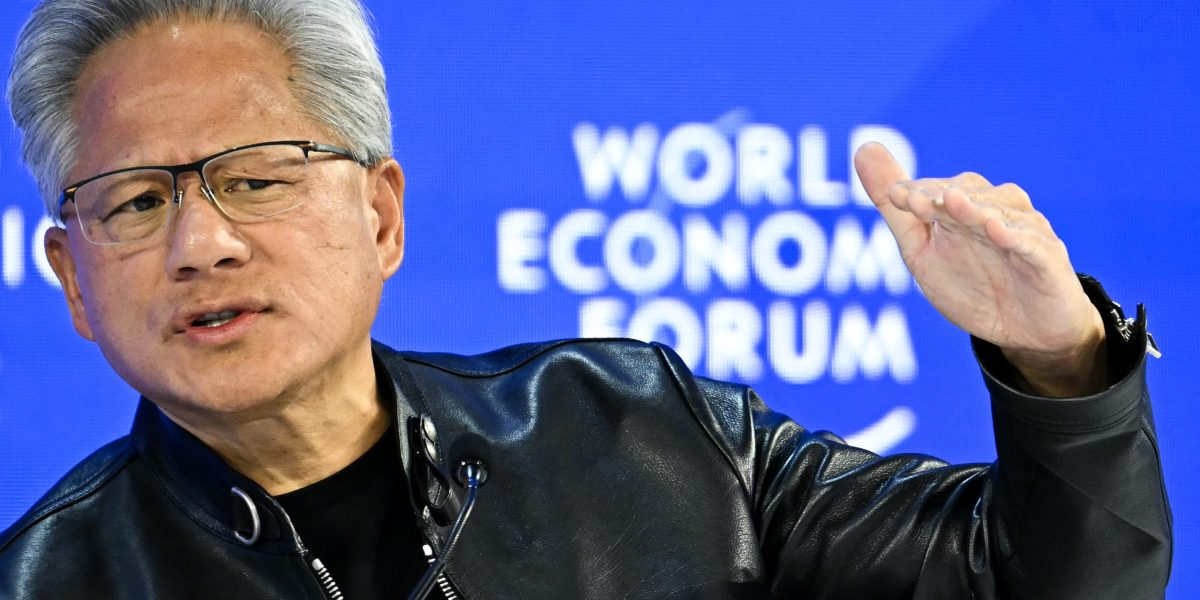
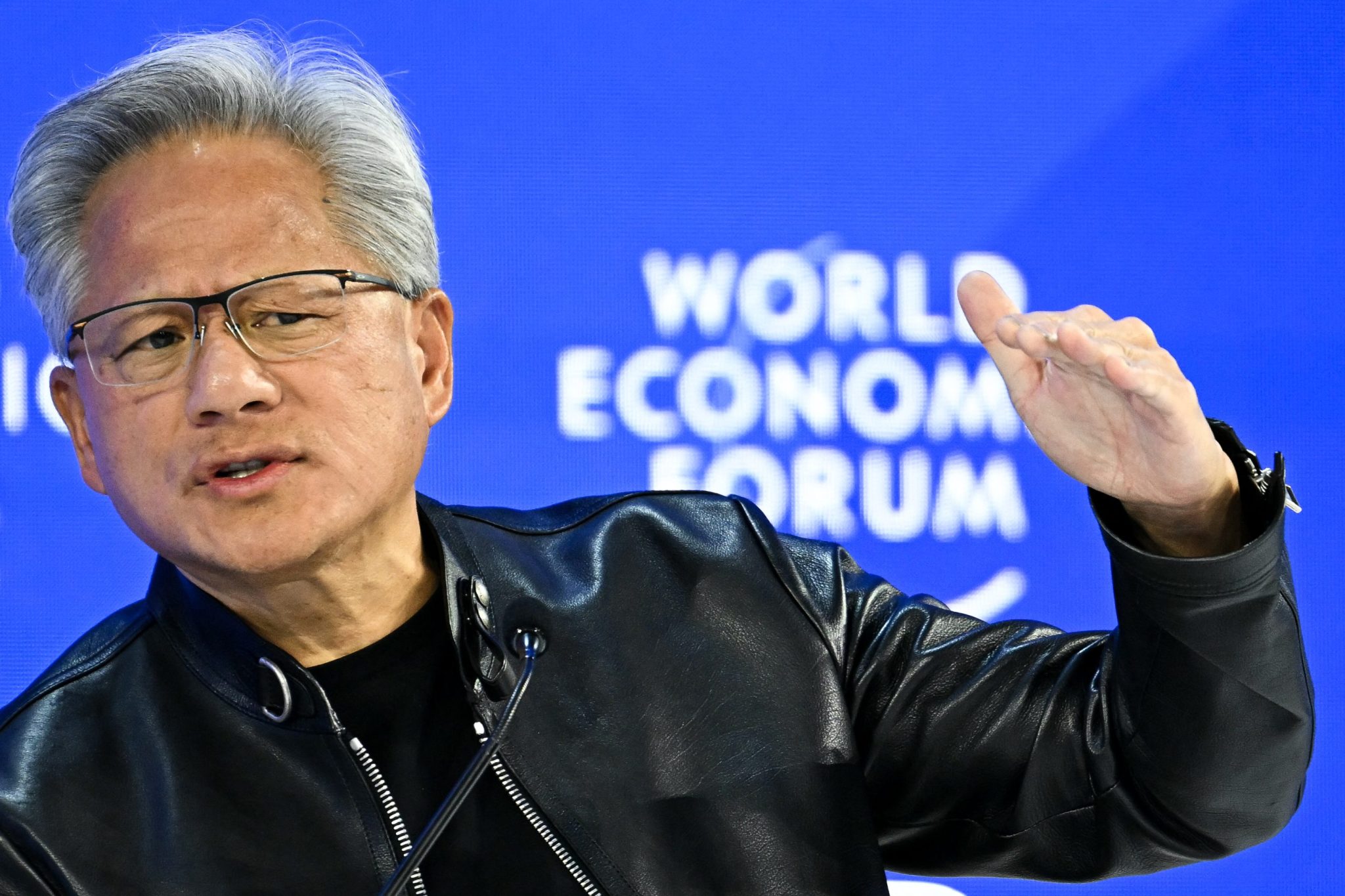
Pushing back against growing skepticism regarding the sustainability of artificial intelligence spending, Nvidia CEO Jensen Huang argued against the mountain backdrop of Davos, Switzerland, that high capital expenditures are not a sign of a financial bubble, but rather evidence of “the largest infrastructure buildout in human history.”
Speaking in conversation with BlackRock CEO Larry Fink, the interim co-chair of the World Economic Forum, Huang detailed an industrial transformation that extends far beyond software code, reshaping global labor markets and driving unprecedented demand for skilled tradespeople. While much of the public debate focuses on the potential for AI to replace white-collar jobs, Huang pointed to an immediate boom in blue-collar employment required to physically construct the new computing economy.
“It’s wonderful that the jobs are related to tradecraft, and we’re going to have plumbers and electricians and construction and steel workers,” Huang said. He noted the urgency to erect “AI factories,” chip plants, and data centers has radically altered the wage landscape for manual labor. “Salaries have gone up, nearly doubled, and so we’re talking about six-figure salaries for people who are building chip factories or computer factories,” Huang said, emphasizing the industry is currently facing a “great shortage” of these workers.
Ford CEO Jim Farley has been warning for months about the labor shortage in what he calls the “essential economy,” exactly the type of jobs mentioned by Huang in Davos. Earlier this month, Farley told Fortune these 95 million jobs are the “backbone of our country,” and he was partnering with local retailer Carhartt to boost workforce development, community building, and “the tools required by the men and women who keep the American Dream alive.”
It’s time we all reinvest in the people who make our world work with their hands,” Farley said.
In October, at Ford’s Pro Accelerate conference, Farley shared that his own son was wrestling with whether to go to college or pursue a career in the trades. The Ford CEO has estimated the shortage at 600,000 in factories and nearly the same in construction.
Huang dismisses bubble fears
Fink brought up the bubble talk for a good reason: Fear of a popping bubble gripped markets for much of the back half of 2025, with luminaries such as Amazon founder Jeff Bezos, Goldman Sachs CEO David Solomon, and, just the previous day in Davos, Microsoft CEO Satya Nadella, warning about the potential for pain. Much of this originated in the underwhelming release of OpenAI’s GPT-5 in August, but also the MIT study that found 95% of generative AI pilots were failing to generate a return on investment. “Permabears” such as Albert Edwards, global strategist at Société Générale, have talked about how there’s likely a bubble brewing—but then again, they always think that.
Huang, whose company became the face of the AI revolution when it blew past $4 trillion in market capitalization (a bar recently reached by Alphabet on the positive release of its Gemini update), tackled these fears in conversation with Fink, arguing the term misdiagnoses the situation. Critics often point to the massive sums being spent by hyperscalers and corporations as unsustainable, but Huang countered the appearance of a bubble happens because “the investments are large … and the investments are large because we have to build the infrastructure necessary for all of the layers of AI above it.”
Huang went deeper on his food metaphor, describing the AI industry as a “five-layer cake” requiring total industrial reinvention, with Nvidia’s chips a particularly crunchy part of the recipe. The bottom layer is energy, followed by chips, cloud infrastructure, and models, with applications sitting at the top. The current wave of spending is focused on the foundational layers—energy and chips—which creates tangible assets rather than speculative vapor. Far from a bubble, he described a new industry being built from the ground up.
“There are trillions of dollars of infrastructure that needs to be built out,” Huang said, noting that the world is currently only “a few 100 billion dollars into it.”
To prove the market is driven by real demand rather than speculation, Huang offered a practical “test” for the bubble theory: the rental price of computing power as seen in the price of Nvidia’s GPU chips.
“If you try to rent an Nvidia GPU these days, it’s so incredibly hard, and the spot price of GPU rentals is going up, not just the latest generation, but two-generation-old GPUs,” he said. This scarcity indicates established companies are shifting their research and development budgets—such as pharmaceutical giant Eli Lilly moving funds from wet labs to AI supercomputing—rather than simply burning venture capital.
Beyond construction and infrastructure, Huang addressed the broader anxiety regarding AI’s impact on human employment. He argued AI ultimately changes the “task” of a job rather than eliminating the “purpose” of the job. Citing radiology as an example, he noted that despite AI diffusing into every aspect of the field over the last decade, the number of radiologists has actually increased. Because AI handles the task of studying scans infinitely faster, doctors can focus on their core purpose: patient diagnosis and care, leading to higher hospital throughput and increased hiring.
Fink reframed the issue, based on Huang’s pushback. “So what I’m hearing is, we’re far from an AI bubble. The question is, are we investing enough?” Fink asked, positing that current spending levels might actually be insufficient to broaden the global economy.
Huang appeared to say: not really. “I think the the opportunity is really quite extraordinary, and everybody ought to get involved. Everybody ought to get engaged. We need more energy,” he said, adding the industry needs more land, power, trade, scale and workers. Huang said the U.S. has lost its workforce population in many ways over the last 20-30 years, “but it’s still incredibly strong,” and in Europe, pointing around him in Switzerland, he saw “an extraordinary opportunity to take advantage of.” He noted 2025 was the largest investment year in venture capital history, with $100 billion invested around the world, mostly on AI natives.”
Huang concluded by emphasizing this infrastructure buildout is global, urging developing nations and Europe to engage in “sovereign AI” by building their own domestic infrastructure. For Europe specifically, he highlighted a “once-in-a-generation opportunity” to leverage its strong industrial base to lead in “physical AI” and robotics, effectively merging the new digital intelligence with traditional manufacturing. Far from a bubble, he seemed to be saying, this is just the beginning.
InvestingBlackRock,bubble,Davos,Jensen Huang,Larry Fink,Nvidia#Jensen #Huang #bubble #fears #dwarfed #largest #infrastructure #buildout #human #history1769011509

