

 wellnessfitpro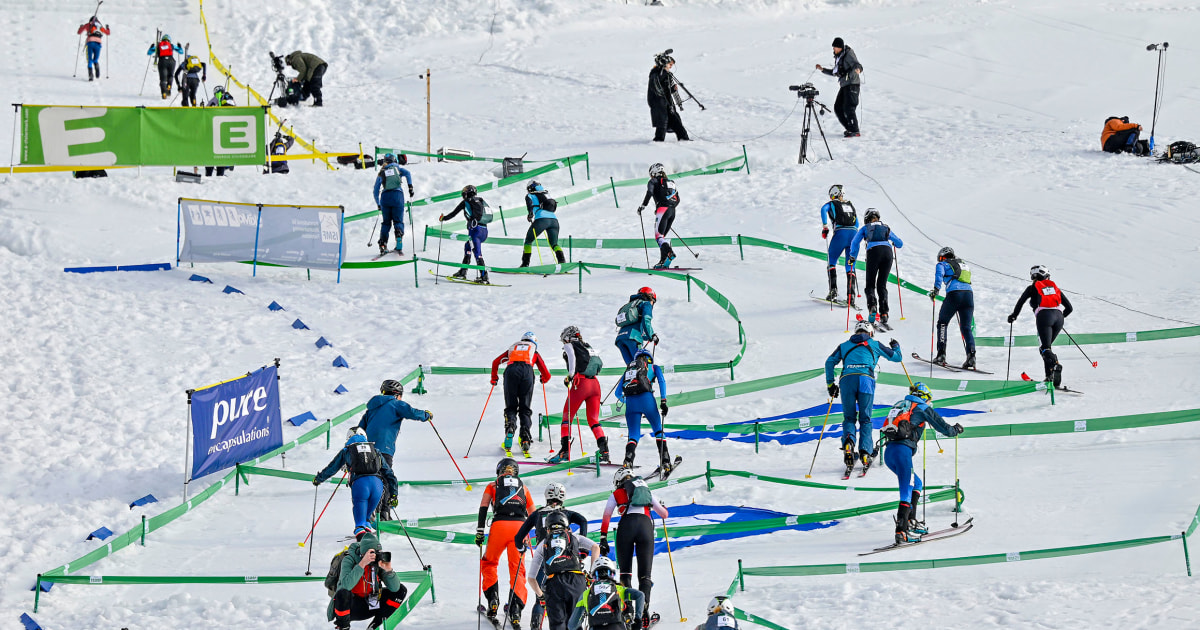
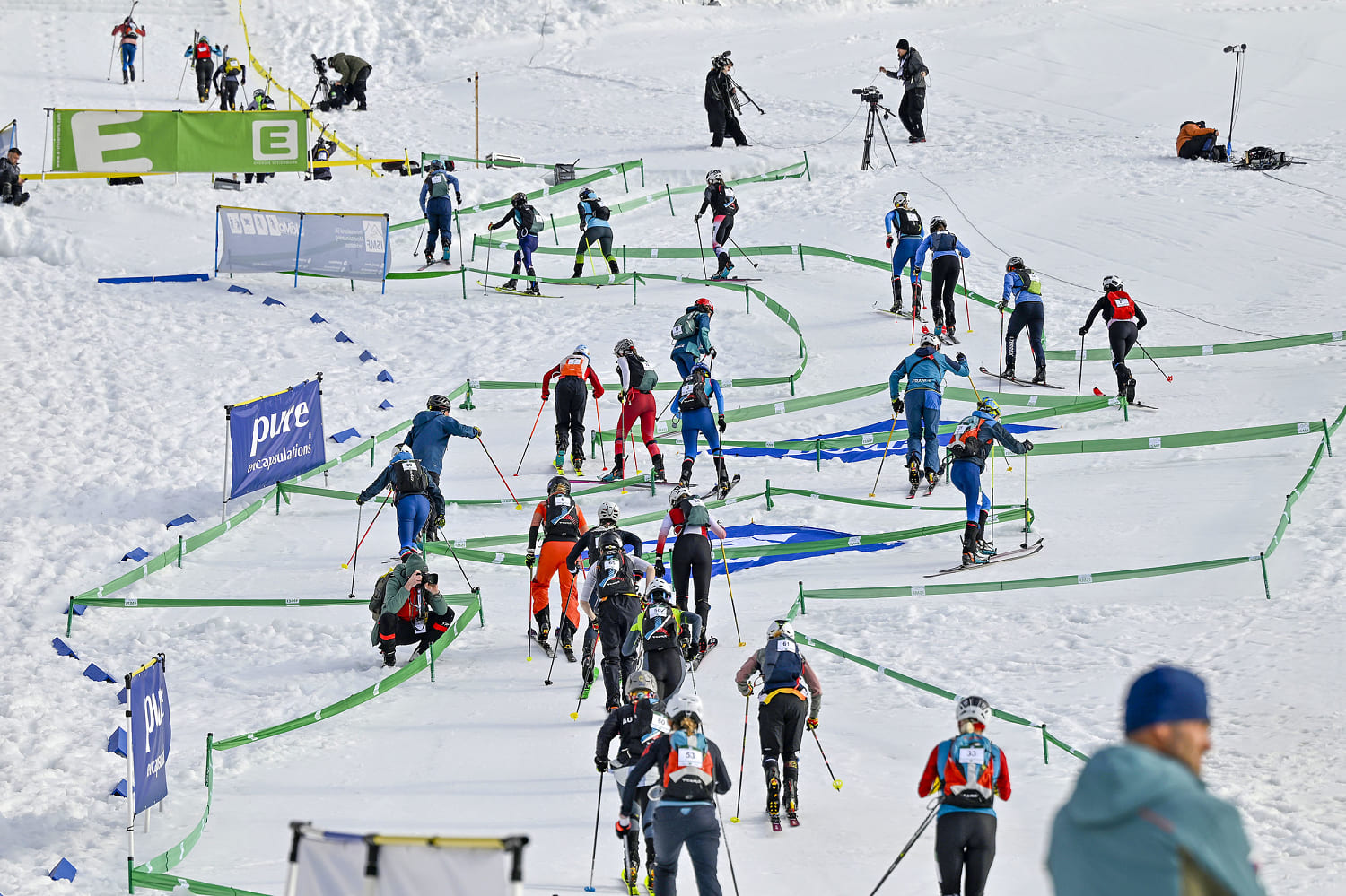
This week, for the first time at the Olympics, skiers will scamper uphill wearing carpet-like skins on their skis or just their stiff boots, then barrel back down an ungroomed course.
This is ski mountaineering — or skimo — the newest Olympic event. It’s a brutal high-altitude sport.
Follow along for live coverage
“I think they are the athletes who have the highest pain threshold and can really suffer,” Dr. Volker Schöffl, the physician for the German ski mountaineering team, said in an interview. “They sprint, they run and then, you know, gradually everybody is dying around you until one man is standing and finishing first.”
Three skimo events will be held in Bormio, Italy, starting Thursday: men’s sprint, women’s sprint and a mixed relay with a competitor of each gender. The United States will compete in the relay but not the sprints.
The sprint events last about three minutes, while the mixed relay usually takes a little over a half-hour. The relay starts with a section of skinning — essentially racing uphill with a free heel and climbing skins glued to the skis. Then the athletes rip off the skins and ski a short downhill portion before returning to climbing, this time with a combination of skinning and bootpacking (dashing uphill in their ski boots, with skis secured to a backpack). Finally, they descend to the base of the hill.
The sprint course is about half as long as that of the relay, where one lap is about 1,500 meters, or nearly a mile. The relay pairs complete four laps, with women taking the first leg and the team members alternating from there. Eighteen relay teams will compete.
“It’s really a distance that pushes the body to its physical capacities — so being able to push as hard as you can but not tipping over that edge,” said Sarah Cookler, the head of sport for the U.S. Ski Mountaineering Association.
It also takes focus to transition between travel modes efficiently while racing.
“If you have pushed your body into this lactic state where your hands are cramping and you have tunnel vision, it makes it very hard to maneuver and do all of those really specific fine motor skills … not to mention then having the skill to race down,” Cookler said.
During the racers’ descent, viewers are unlikely to see elegant or powerful turns because the competitors use featherweight gear that offers less control.
“You might look at these skiers and be like, ‘Oh, my God, they can’t ski,” Cookler said, adding that some athletes adopt a leaned-back stance that few Alpine ski instructors would recommend. “It’s because of the gear.”
Although skimo is new to modern audiences, it harkens back to the earliest days of skiing, when ancient travelers strapped their feet to two planks of wood and sometimes used animal skins for a better grip while moving uphill.
“Skimo is a really old sport. Much like Nordic skiing, it stems all the way back from when mountain people just needed an efficient way to travel,” said Christina Volken, a former USA Skimo competitor who lives in Washington.
In fact, skis predate the wheel. The oldest fragments of skis date back to 6700 B.C. There’s also evidence that ancient snow travelers used climbing skins — animal skins fixed to the underside of the skis — for uphill travel.
In an Olympic context, the sport bears some resemblance to an event called military patrol that was held in the 1924 games in Chamonix, the first Winter Olympics. That four-man ski race is considered a precursor to both biathlon and ski mountaineering: Competitors crossed nearly 20 miles of Alpine terrain, with a round of target shooting at the finish.
Representing the U.S. in the skimo relay are Anna Gibson and Cam Smith. Smith, a veteran skimo racer, has been competing for about a decade, whereas Gibson is newer to the sport. A professional trailrunner, Gibson ran track in college and grew up skiing in Jackson Hole, Wyoming.
The U.S. has been playing catchup in skimo against some of the mountainous European countries. While backcountry skiing is popular in the U.S., skimo racing caught on later.
“It’s been this sort of grassroots thing, where people were volunteering to coach,” Volken said. “We haven’t had the funding.”
In the lead-up to the Olympics — and on the wings of a donation from tech entrepreneur Michael Paulus — USA Skimo hired Cookler and an Italian coach with experience in World Cup skimo races.
“It was kind of a last-minute ditch effort to get there, but we made significant improvements from last year,” Cookler said. “Being able to make it to the Olympics was the No. 1 goal.”
There is more to skimo than what the Olympics will show, however. Organizers have chosen to feature some of the shortest, safest and most accessible forms of the sport.
By contrast, in longer endurance races like the Patrouille Des Glaciers, teams of three travel roughly 35 miles over steep, complicated, avalanche-prone terrain. Those competitors carry gear such as avalanche transceivers, crampons, ice axes and climbing ropes. The Olympic racers, however, won’t have much in their backpacks — just balloons or puffy jackets to give the bag enough structure to carry skis.
Cookler said she hopes this year’s events make enough of a splash that organizers of future Winter Games will add longer skimo races with more technical climbing.
“This is just the foot in the door,” she said.
#Ski #mountaineering #Olympic #debut1771161254

