

 wellnessfitpro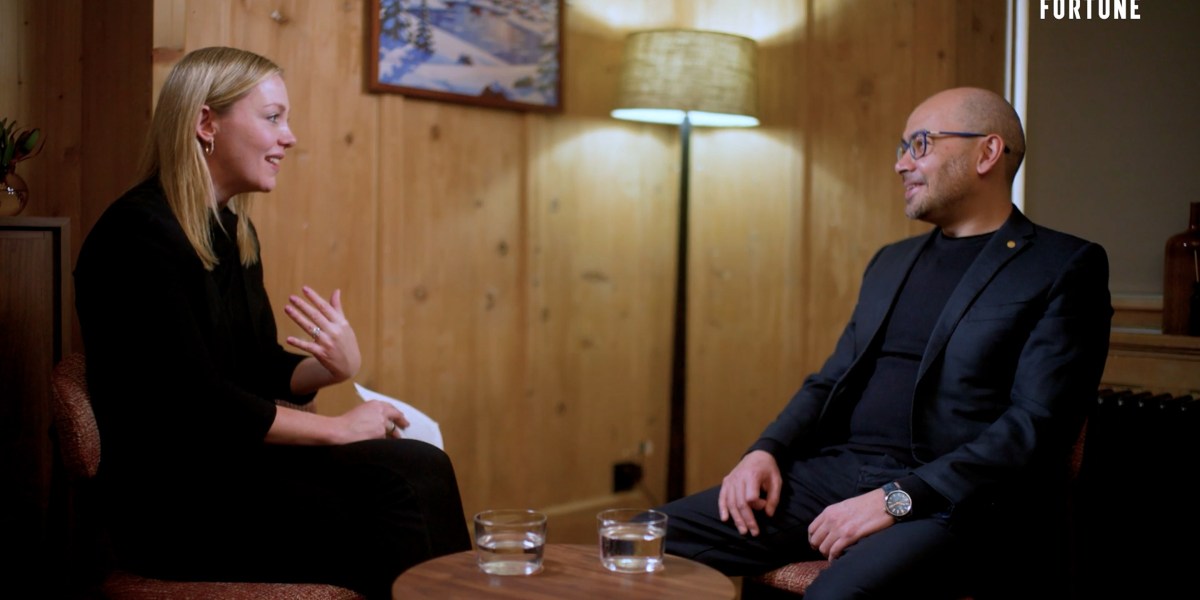
Not so long ago, Google risked being seen as a sleeping giant, coasting on its super-sized status while agile competitors raced ahead in the artificial intelligence arms race. But according to Demis Hassabis, CEO of Google DeepMind, that narrative is dead.
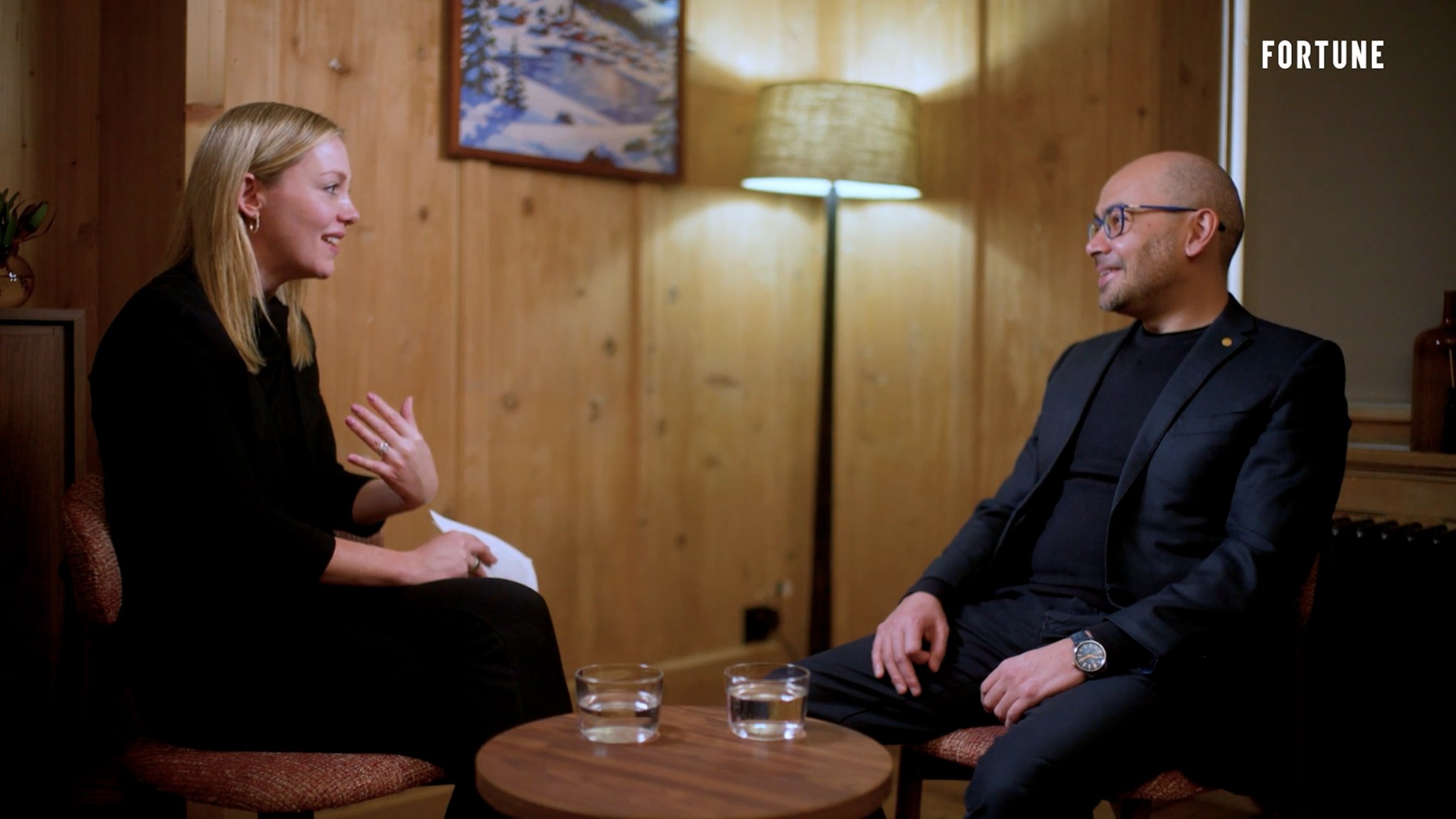
In an interview with Fortune Editor-in-Chief Alyson Shontell on the Titans and Disruptors of Industry podcast, Hassabis revealed that reports of deep engagement by Google co-founders Larry Page and Sergey Brin are very real, and they are actively driving a resurgence that has placed the $3.9 trillion tech titan back on offense. The result, Hassabis claims, is the dawn of a new “golden era” of discovery and product velocity.
“Sergey has been in the weeds, programming,” Hassabis told Fortune regarding Brin’s involvement in recent projects, particularly the fantastically well-received Gemini models. Page is getting involved, as well, Hassabis said, in more strategic ways. This hands-on return has “been fantastic” for Hassabis to see, helping push the company’s technical boundaries and ensuring the necessary resources are deployed to train massive frontier models.
Brin addressed his unretirement in December 2025, speaking at Stanford University’s School of Engineering centennial celebration about stepping back from a day-to-day role in late 2019, just before the pandemic hit. He said he felt himself “spiraling” despite his status as one of the world’s richest men, and found himself going into work when the Googleplex reopened for employees in 2023. The Wall Street Journal reported at the time that this meant Brin showing up for work three to four times per week, and by February 2025 he had issued an internal memo advising Google employees visiting Mountain View at least five times a week, with 60-hour weeks hitting the “sweet spot” of productivity.
Getting back to a ‘shipping culture’
This renewed founder intensity coincides with a massive structural shift: the merger of the Google Brain and DeepMind research units. Hassabis, who now leads the combined entity, described Google DeepMind as the “engine room” of the company—a “nuclear power plant” plugged into Google’s vast ecosystem of Search, YouTube, and Chrome.
The consolidation was driven by a period Hassabis acknowledged as a wake-up call: 2023, following the explosive release of OpenAI’s ChatGPT. To compete in the age of scaling laws, Google needed to pool its talent and, crucially, its computing power. “Even someone like Google didn’t have enough compute to have two, you know, frontier projects under one umbrella,” Hassabis explained.
“We had two world-class groups in original DeepMind and Google Brain,” he said, adding that he still doesn’t think Google gets enough credit for the fact that something like 90% of themodern AI industry is built on tech or discovering from those groups. Clarifying that he thinks Google has “incredible talent … better than anywhere else in the world by a long way,” it was still “getting complicated having two groups, especially given the amount of compute needed.”
The strategy appears to be working. Following the internal restructuring, Alphabet saw its shares skyrocket approximately 65% by the end of 2025, driven by the release of Gemini 3 and a viral image generation model known as “Nano Banana”. Hassabis claimed that the company has “crossed the watershed moment” with these latest models, which are now capable enough to assist in high-level research and coding.
Hassabis characterizes this period as a rediscovery of Google’s roots, making Page and Brin’s hands-on return all the more fitting. The goal was to resurrect the “shipping culture” of 10 to 15 years ago—taking “calculated risks” and moving with speed. Hassabis said he believes the company has been rediscovering “the golden era of Google” by taking calculated risks, shipping quickly, and embracing innovation. The focus is also on being thoughtful, scientific, and rigorous about what products it ships, whether that’s engineering or scientific. “We’ve really got into our groove,” Hassabis said. “And I think other people and the external world are starting to feel that”.
Looking beyond the stock price, Hassabis said he views this corporate renaissance as a stepping stone to a broader scientific one. He predicted that what is shaping up to be the second Google golden age will help unlock, in 10 to 15 years, a world of “radical abundance.” His vision includes using AI to solve the energy crisis through fusion or solar breakthroughs, revolutionizing human health to the point where “medicine won’t look like it does today,” and eventually using those resources to “travel the stars.”
For the immediate future, however, the focus remains on the “classic innovator’s dilemma”: disrupting their own core business before a competitor does. With the founders back in the trenches and a unified AI division powering the ship, Hassabis said he believes Google is no longer reacting to the future, but building it. “If we don’t disrupt ourselves, someone else will,” Hassabis said. “You’re better off… doing it on your terms.”
Watch the full episode on YouTube. The interview transcript can be found here.
AIFortune 500: Titans and Disruptors of Industry,Google,Larry Page,Sergey Brin#Google #Gemini #boss #describes #working #founders #Larry #Page #Sergey #Brin1770910806

