

 wellnessfitpro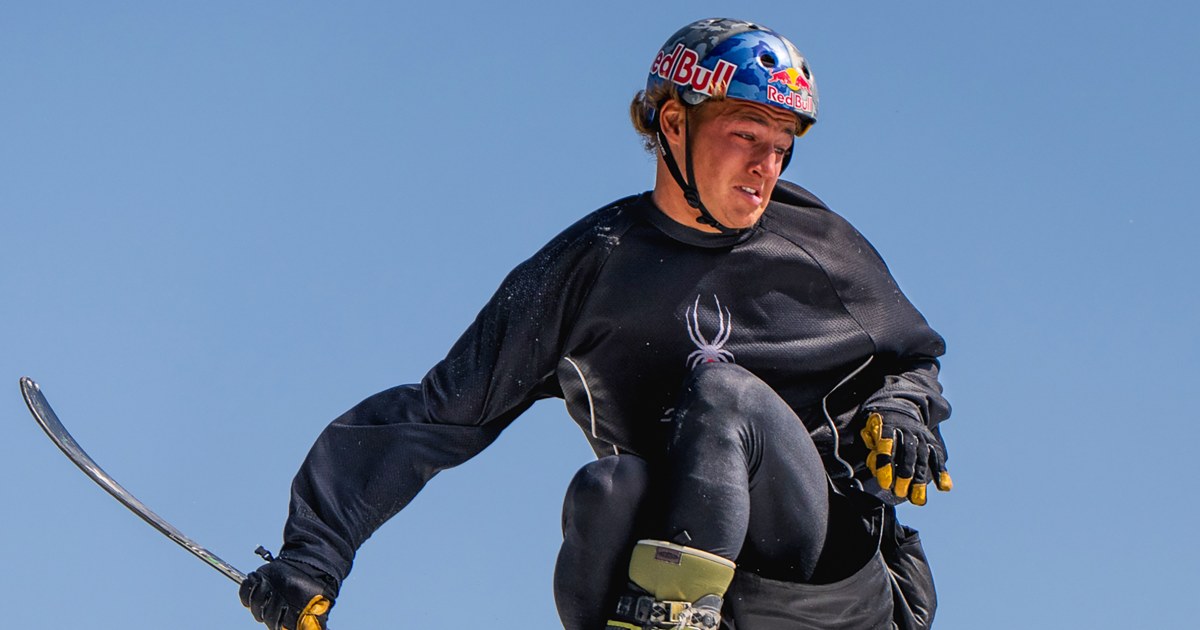
We really break a trick down [in our minds beforehand]. For me, if I’m doing a triple cork, which is three flips, I’m thinking about it in three separate flips. What am I doing in the first flip? What am I doing in the second one? What am I doing in the third one? And also, what am I supposed to be grabbing? Tail grab, Japan grab, double Japan grab — there’s tons and tons of grabs. It’s about thinking about where your body position is going to be, where you’re going to be grabbing, where you’re looking.
Going blind
Air awareness is where you know where you are in the air. It’s a huge part of our sport. If you don’t know where you are, you can’t land on your feet because you don’t know where the ground is and where the sky is.
The first progression of this trick is a switched-up cork 1260 mute. You take off backwards, switch 1260, you flip two times, and you grab mute. And that trick I learned when I was 17 years old. I’ve been doing it for so long now. It’s like the back of my head. I can do it with my eyes closed.
The next [progression] after that is a switch triple 1620 — it’s the next step up from the 1260. Last year I did it at almost every event. I did it in slopestyle events. I did it in big airs, and it did really well. That’s the next step.
And then I learned the 19[80] this year in Mammoth [Mountain, in California] in May. I did it on the airbag when I was 21. The last Olympic year, I did on the airbag. I never did it on snow, for some reason. I think I just couldn’t really find the right time to do it. But I kind of knew I wanted to do it this year.

This [trick] is a lot scarier, because instead of just adding another flip to the 1620, you have to “go blind” for a second, where you look over your shoulder and you can’t really see what’s happening. … Terrifying. You just don’t know what’s happening. You don’t really know what’s up and what’s down. … You just have to trust that you’re going to get around and get that little spin in the middle of the trick, because you’re adding another 360[-degree rotation] into it. So you have to kind of go blind for a second in the air. You don’t really know what’s happening. But then once you get that little rotation in the middle of the trick, you kind of like look past and let it keep going, and it just works.
You see a lot less of what’s happening [in the air] because you’re spinning so much. If my takeoff isn’t good, then I can’t do it. If I miss my grab, I can’t do it. If I am spinning too slow but I commit to the trick, I’m gonna land on my face because I’m not spinning fast enough. There’s so many variables going on that if you don’t get it right, you’re just going to really hurt yourself.
‘It’s do or die’
[The key to a good takeoff] is getting the right power: how much spin and flip you’re getting and your positioning of your body. Your takeoff, sometimes you can rush it. It’s called going early. Your skis take off when the jump ends. Or your body is in a weird position before the jump is off. It’s about being patient and, like, letting it happen but also getting enough power to spin enough. If you’re too patient, then you’re not gonna have enough time to get it around.
#Mac #Forehand #goldmedal #favorite #Winter #Olympics #trick #win1769685982

