

 wellnessfitpro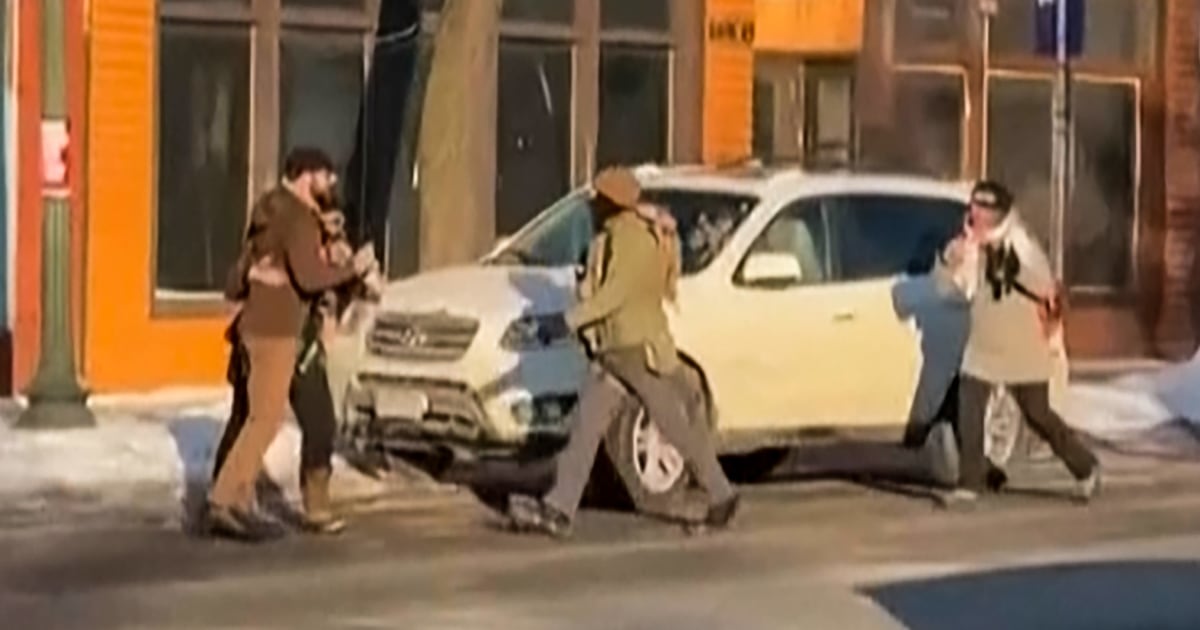
The inquiries launched by the Trump administration after immigration officers killed Renee Good and Alex Pretti in Minneapolis are a departure from the government’s long-standing practices around investigations into high-profile killings by law enforcement, according to local prosecutors and former federal officials.
Top officials in the Trump administration were quick to say in the aftermath of the fatal shootings that the immigration officers’ actions were justified, and said that a deeper federal criminal civil rights probe wasn’t warranted at this time, raising questions about an independent investigation. Good, Homeland Security Secretary Kristi Noem said, had been committing “domestic terrorism.” Pretti, top Trump aide Stephen Miller said, was a “would-be assassin,” though eyewitness video contradicts those narratives.
And local authorities have been cut out from the probe, raising questions about how evidence is being handled.
“Nothing about what is going on here is normal,” Clare Diegel, an attorney with the Hennepin County Attorney’s Office, said during a federal court hearing Monday, after the county asked a judge to extend an order forcing Homeland Security officials to preserve evidence in the shooting of Pretti.
“From a law enforcement perspective, this is astonishing,” Minnesota officials said in their court filing over evidence preservation. “The federal government’s actions are a sharp departure from normal best practices and procedure, in which every effort is taken to preserve the scene and the evidence it contains.”
After their initial statements, Noem and other officials later pointed to the ongoing investigations to determine what had happened. And Trump himself on Tuesday promised a thorough look into Pretti’s death.
“We’re doing a big investigation … I want a very honorable and honest investigation,” he said. “I have to see it myself.”

But Jason Houser, a former DHS counterterrorism official and ICE chief of staff during the Biden administration, said the shooting “should never be adjudicated in the court of public opinion,” but instead be subject to an independent review by multiple agencies. Anything less than that erodes trust in federal law enforcement, he said.
In the past, when Americans have been killed by members of law enforcement in high-profile incidents, the Justice Department has launched probes often within days, banking on their public reputations and promises of independence to ease public tensions to assure some form of accountability. That was the case, for example, after the killing of Michael Brown in Ferguson, Missouri and Freddie Gray in Baltimore.
The FBI, which typically leads investigations, puts an emphasis on maintaining working relationships with local law enforcement and, in most jurisdictions, would work collaboratively with local officials to gather evidence and probe the case.
In the Minneapolis shootings, though, the Justice Department has taken a back seat. The probes are being led by Homeland Security Investigations and the Office of Professional Responsibility, assisted by the FBI, which has cut out local authorities.
Under the Trump administration, the Justice Department’s Civil Rights Division — which would typically be involved in reviewing whether a law enforcement officer should face criminal charges in a shooting — has been gutted. And Attorney General Pam Bondi has de-emphasized investigations into policing tactics, directing attorneys to pursue cases against protesters and instances of “domestic terrorism.”
Not every use of deadly force by federal agents turns into a federal civil rights investigation. A Justice Department official insisted the investigations were being handled as usual, telling NBC News that the DOJ may investigate for civil rights violations “at some later point if the evidence presents itself.”
The Justice Department is focusing on investigating Minnesota Gov. Tim Walz, Minneapolis Mayor Jacob Frey and other Democratic state officials for their public comments about the immigration operations, and is investigating whether Becca Good, Renee Good’s partner, impeded federal agents in the moments before the fatal shooting.
Walz and Frey have said the investigations are purely political; Good’s attorney has said she hasn’t been contacted by law enforcement and is not aware of an investigation, but the attorney has criticized the response to the shooting.

The handling of the Good shooting has resulted in multiple resignations of career federal prosecutors, as well as an FBI special agent.
The credibility of the Justice Department, as DOJ’s own internal watchdog noted in a report issued Monday, is essential to its mission. The Justice Department’s inspector general said that the department “cannot succeed in its own mission” without the trust of the public, and that the DOJ “maintains the public’s trust by faithfully applying the law to the facts.”
Meanwhile, state officials are trying to investigate despite a lack of cooperation from federal officials.
There is a tangle of unanswered questions. In each shooting, the chaos involved multiple officers during immigration enforcement operations. Bystanders recorded events from the street. In the Pretti shooting, multiple agents had body cameras and the video is being analyzed.
On Tuesday, DHS sent an initial report to congressional committees from the internal investigation into Pretti’s death.
It details how agents pepper-sprayed Pretti and a woman in the roadway before they tried to take him into custody, and that an agent had yelled “He’s got a gun!” multiple times. Pretti was legally allowed to carry a gun. Two immigration officers fired during the encounter.
#Questions #swirl #federal #governments #plan #investigate #DHS #shootings1769619697

