

 wellnessfitpro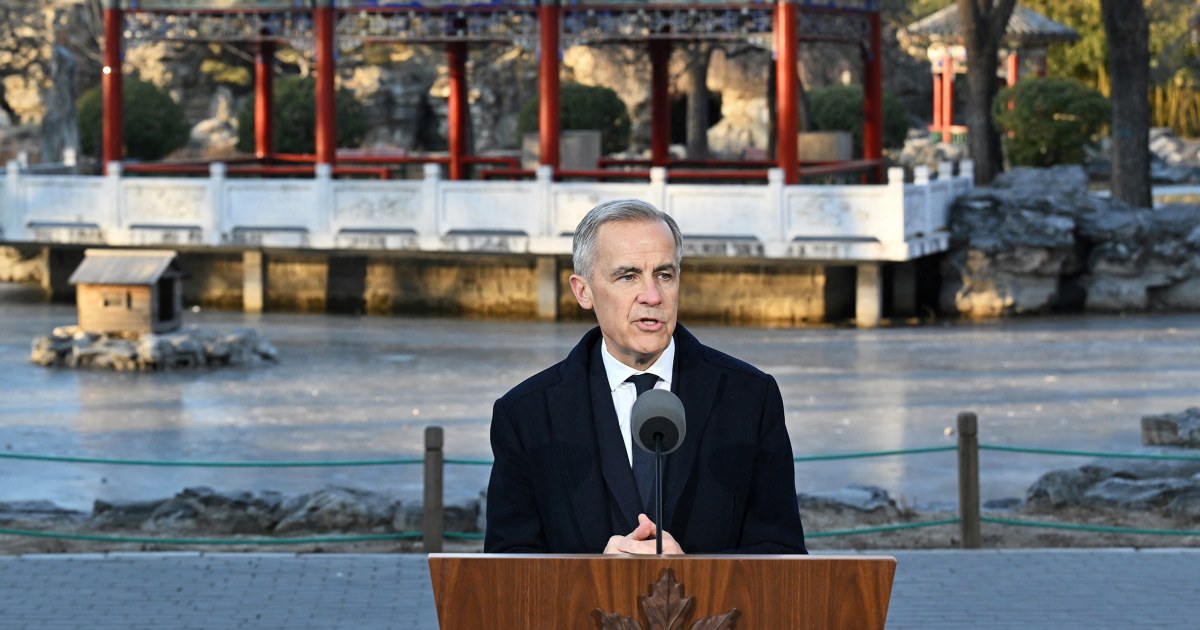
BEIJING — With U.S. ties at their lowest point in modern history, Canada is turning to one of the only countries with which it had even worse relations: China.
Canada is forging a “new strategic partnership” with China, its second-biggest trading partner, Prime Minister Mark Carney said Friday during what he called a “historic” trip to Beijing. That includes a break with the United States on tariffs, which have hit both the Canadian and Chinese economies.
Carney, the first Canadian prime minister to visit China since 2017, met with President Xi Jinping at the Great Hall of the People. He is one of a series of world leaders shaken by President Donald Trump’s geopolitical disruptions who are traveling to Beijing as it seeks to exploit U.S. unpredictability to bolster its global influence.
For Canada, the Trump administration has been especially head-spinning.
“The United States used to be a friend and ally,” Guy Saint-Jacques, a former Canadian ambassador to China, told NBC News in an interview. Now, “we are treated as an enemy.”
Cutting tariffs
Carney’s trip follows years of frosty relations over Beijing’s lengthy detention of two Canadians regarded as hostages as well as allegations of Chinese interference in Canadian politics.
Those tensions slowed investment and left Canada “even more dependent on our largest trading partner,” Carney said, referring to the U.S., which is now the object of extraordinary Canadian anger and boycotts after a year of insults and threats by Trump.
As part of an effort to “recalibrate” the relationship, Carney said Canada had agreed to cut its 100% tariff on Chinese electric cars in return for lower tariffs on Canadian farm products.
It’s a major shift for Canada, a major auto producer that in 2024 followed the U.S. in imposing the 100% tariff.
Carney said Canadians would also be allowed to travel to China visa-free.

During their meeting earlier Friday, Xi told Carney that China was willing to strengthen coordination “to jointly address global challenges.”
Carney, who called China his country’s biggest security threat while campaigning for office last year, said Friday that the global security landscape “continues to change.”
“In a world that’s more dangerous and divided, we face many threats,” he said.
Though Canada’s relationship with the U.S. is much deeper and broader, Carney said, ties with China were now “more predictable.”
A ‘tough spot’ for Canada
Canada-China relations went into a “deep freeze” in 2018 when China arrested the two Canadians, former diplomat Michael Kovrig and entrepreneur Michael Spavor, said Lynette Ong, a professor of Chinese politics at the University of Toronto.
Their detention came days after Canada arrested Meng Wanzhou, an executive at the Chinese tech giant Huawei, at the request of U.S. officials seeking her extradition on fraud charges. Kovrig and Spavor, who were accused of spying, spent almost three years in Chinese detention before being released in 2021, hours after Meng made a deal with the Justice Department.

“Even after the two Michaels were released, people did not warm up to China at all,” Ong said.
Then Trump returned to the White House last January.
Within days, he imposed a 25% tariff on most Canadian goods and started talking about making Canada, a nation of 40 million people, the 51st U.S. state.
U.S.-Canada trade talks have been on hold since October, when Trump cut them off in anger over an anti-tariff ad produced by the Ontario government.

Canadian public opinion on China is becoming more positive even as goodwill toward the U.S. plummets, according to polling by the Pew Research Center. Last year, 34% of Canadian survey respondents had a favorable opinion of China, up from 21% in 2024 before Trump took office.
An equal proportion of respondents had a favorable opinion of America, down from 54%.
Though the same pattern can be seen in a number of countries around the world, in Canada “the flip is especially obvious,” Ong said.
Canadian officials say they are seeking to grow non-U.S. trade by at least 50% over the next 10 years.
“Further trade engagement with China should first and foremost be seen as diversification away from the United States,” Ong said.
About 75% of Canada’s manufactured goods exports go to the U.S., according to government figures. China is the second-largest market at about 4%.
Though Canada is seeking to increase exports to a number of countries — including India, where Carney has also been trying to improve strained relations — a major priority is China, where imports of Canadian goods fell more than 10% last year, according to Chinese customs data released Wednesday.
The two countries made a major step forward in October when the leaders met on the sidelines of a regional summit in South Korea, where Xi invited Carney to Beijing.
The speed with which Carney went to China “reflects a sense of urgency,” said Saint-Jacques, the former ambassador. “He knows that Canada is in a tough spot.”

Showing the U.S. that Canada has other options for its exports, he said, could put Carney in a stronger position as the U.S., Canada and Mexico begin a “joint review” of their free trade agreement, known as the USMCA. Trump this week dismissed the agreement, which he praised when it was announced during his first term, as “irrelevant.”
At the same time, “Canadians know also that China is a very difficult partner,” Saint-Jacques said. “We know very well how they can contravene international rules.”
Saint-Jacques said that in his meeting with Xi, Carney would “emphasize the need to put pressure on Putin to accept a ceasefire in the war in Ukraine,” in addition to discussing China’s relationship with North Korea and expressing support for the Beijing-claimed island of Taiwan.
Like the U.S., Canada has no official ties with Taiwan, a self-governing democracy, but supports it in the face of Chinese pressure.
Carney said Friday that he had raised human rights issues such as last month’s conviction of Hong Kong democracy activist Jimmy Lai.
But he added: “We take the world as it is, not as we wish it to be.”
Janis Mackey Frayer reported from Beijing, and Jennifer Jett from Hong Kong.
#Canada #China #cut #tariffs #announce #partnership #Trump #brings #foes1768569485

