

 wellnessfitpro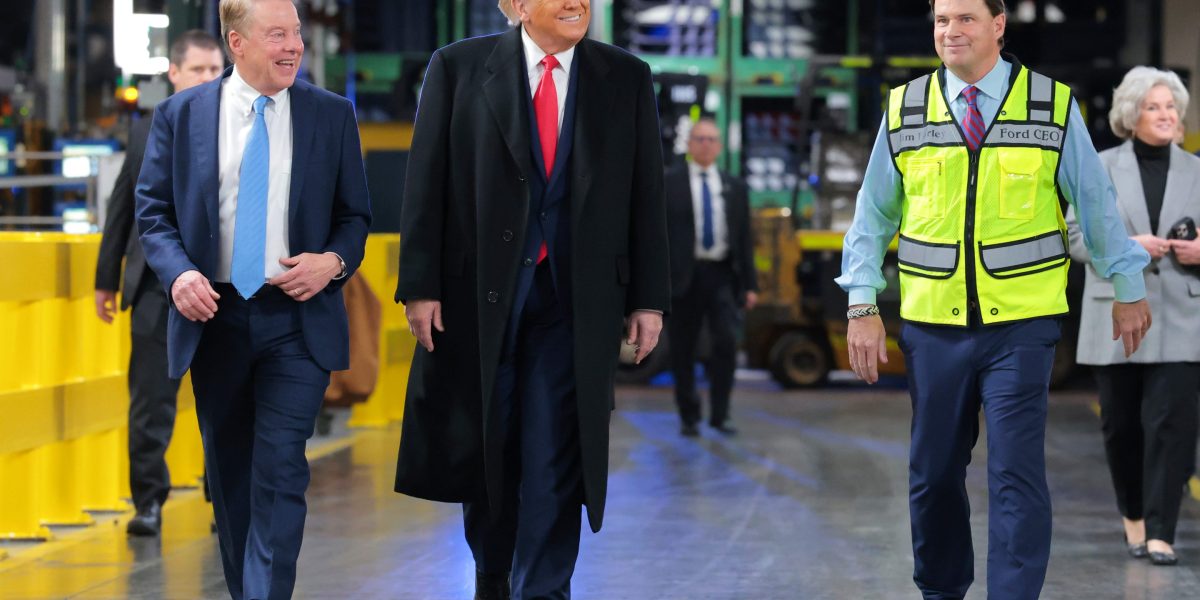
The current story in U.S. manufacturing shows that an economy can look strong and remain so without adding workers.
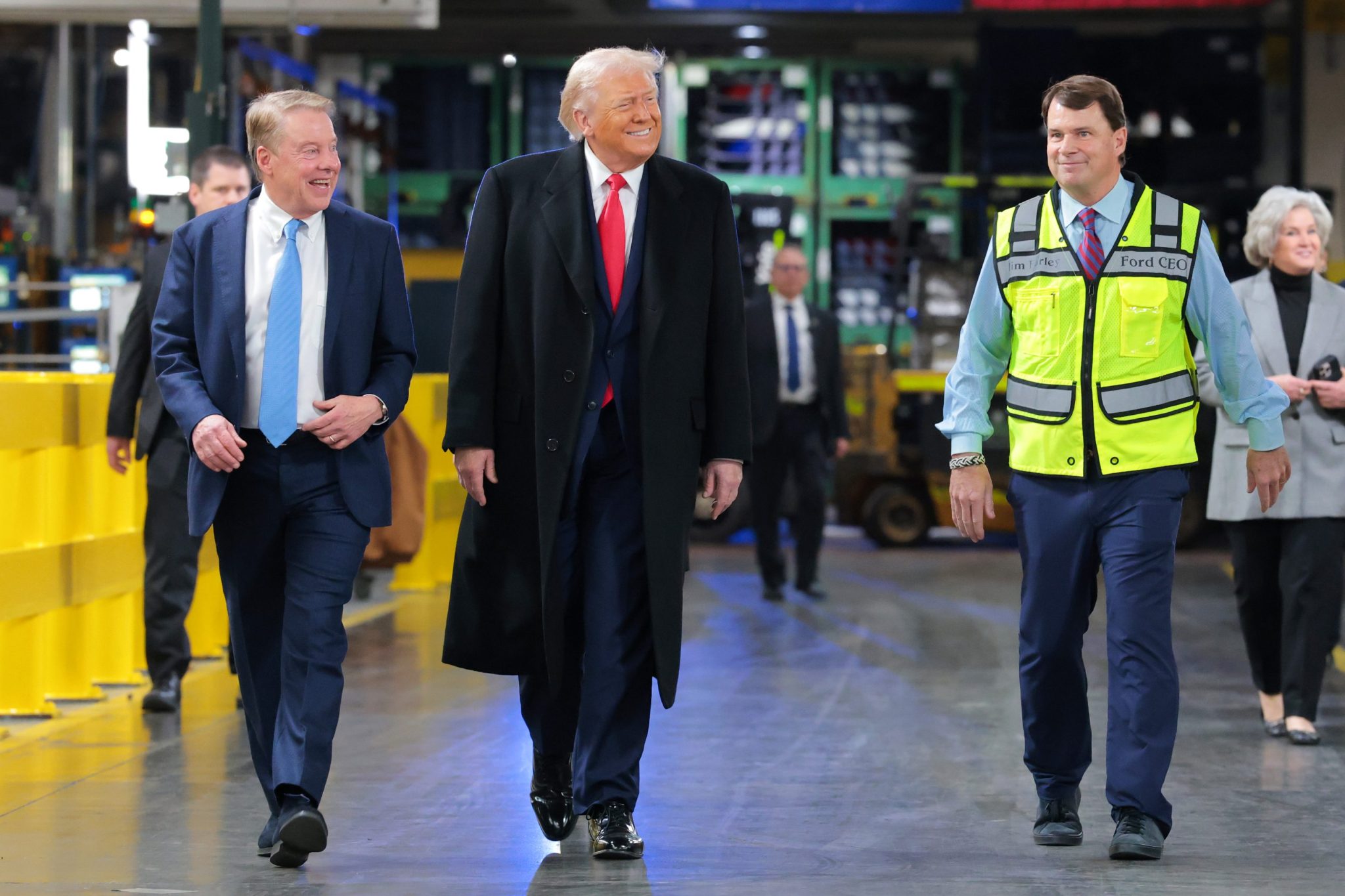
President Donald Trump arrived in Detroit on Tuesday to celebrate what he called a historic manufacturing revival, boasting that “investment is booming” and turbocharging growth. But the auto industry’s supposed recovery has yet to show up where it matters most for workers: payrolls. Manufacturing jobs, including in the automotive sector, have declined every month since Liberation Day, according to labor data.
Standing in the car-making capital of the world, the President spent nearly an hour detailing an $18 trillion global investment surge and a stock market that has set 48 records in eleven months.
“Growth is exploding, productivity is soaring, investment is booming,” the President claimed. “We have quickly gone from the worst numbers on record to the best and strongest.”
The President’s speech leaned heavily on commitments: $5 billion from Ford, $13 billion from Stellantis, and another, massive re-shoring effort from General Motors. “U.S. auto factories are now seeing more than $70 billion of new investment,” Trump noted. “Now they’re pouring back…nobody’s ever seen anything like it.”
While the capital is indeed pouring in, investment is not translating into payrolls. The manufacturing sector has shed approximately 72,000 jobs since the April tariff announcements, with auto manufacturing bearing the brunt of the losses. This disconnect defined much of the economic narrative around 2025 and is set to become the defining paradox of the 2026 economy: a “jobless boom” in which GDP growth—projected by the Atlanta Fed at a robust 5.4% for the fourth quarter—is decoupling from blue-collar employment.
“Manufacturing has been soft for a while,” said Skanda Amarnath, executive director of Employ America. “If you look across the business surveys, the anecdotes are basically the same everywhere: this is a really uncertain environment. That’s not one you want to be hiring into.”
Part of the pressure is structural: tariffs have raised input costs while injecting uncertainty into investment decisions that typically unfold over years, not quarters. The primary issue is a “stacking” effect: tariffs on motor vehicle parts, layered on top of aluminum and steel duties, have made it more expensive for some producers to build a car in Michigan than to import one from abroad. Many U.S. manufacturers still rely on specialized foreign components in their supply chains, so even when production moves back onshore, it tends to arrive far more automated than the factories it replaces.
Amarnath told Fortune the political rhetoric around reshoring often obscures the reality facing manufacturers operating in the present tense. “Whatever the talk is about re-industrialization and onshoring, there’s just a limit to what that actually means for manufacturers who exist in the here and now,” he said.
‘Manufacturing will suffer’
Even when production returns onshore, it increasingly arrives in a highly automated form. The automotive industry has gone all in on robotics, accounting for a third of all consumer robot installations in 2024, according to a survey by the International Federation of Robotics. The U.S. has the fifth-highest ratio of robots to factory workers in the world, on par with Japan and Germany and ahead of China, according to the same survey.
While automation is often framed as a cost-cutting measure, automakers increasingly describe it as a response to labor scarcity. Tighter immigration policies and deportations have narrowed the available workforce while younger generations continue to shun the blue-collar industry, even when wages measurably increase. Ford CEO Jim Farley has said the company has thousands of unfilled mechanic jobs despite offering six-figure pay, calling it a warning sign for the country at large: “we are in trouble in this country.”
“This is about production, not jobs,” said Mark Zandi, chief economist at Moody’s Analytics. “Whatever manufacturing comes back will be highly mechanized. There just won’t be many jobs attached to it.”
The strain is visible in survey data. The ISM Manufacturing PMI fell to 47.9 in December—its lowest reading of 2025—indicating a sector in its tenth consecutive month of contraction. Businesses surveyed consistently cited tariff-induced uncertainty and high intermediate costs as the primary drivers of hiring freezes, along with the instability of weak consumer spending from middle- and lower-class consumers, while upper-class consumers drive most of the spending.
That weakness has emerged even as vehicle sales outperformed most analysts’ expectations in 2025, rising 2% from the previous year. Analysts suggest that consumers rushed the market in the first half of the year, as auto sales popped as consumers anticipated tariff challenges. Much of these sales were driven by wealthy consumers, buoyed by a record-breaking stock market; households earning more than $150,000 annually accounted for 43% of the new cars sold last year, according to analysts at legal firm Foley. Meanwhile, households earning less than $75,000 accounted for 10% less of the market share than last year.
Looking ahead, analysts see a milder but steady 2026 for automobile manufacturing, buoyed by lower interest rates and potential tax refunds, but still hampered by lower consumer spending on the wrong side of the “K.” More broadly, Zandi told Fortune he sees the current manufacturing slump as a byproduct of a world pulling apart.
“The economy is de-globalizing, and manufacturing will suffer as a result,” he said. “We saw this in Trump’s first term during the trade war. Manufacturing went into recession then, and the same dynamic is playing out again.”
Future of WorkElectric vehicles,Fiat Chrysler Automobiles,Ford Motor,Manufacturing,Productivity,Robotics,Tariffs,Tariffs and trade,vehicles#Trump #hails #booming #investment #Detroit #auto #manufacturing #jobs #disappear #month1768425609

